



How can Primary Care Networks utilise their estates to support the delivery of improved health outcomes and support healthcare led regeneration? - AA Projects
The health and social care sectors are seeing unprecedented challenges, which is putting pressure on our systems to improve both quality and efficiency whilst improving patient outcomes in the face of increasing demand.
It is estimated that over 15 million people in England alone are living with a long-term condition1 such as hypertension, depression, asthma, or diabetes. These types of conditions account for around 50% of all GP appointments2 and a high percentage of stays in hospital beds. This number will continue to increase as our population ages and complex health conditions increase, by 2030 it is anticipated that the number of people aged over 75 will increase by over 50%3.
The drivers for change within health and social care don’t stop at demographics, these drivers are well documented and include:
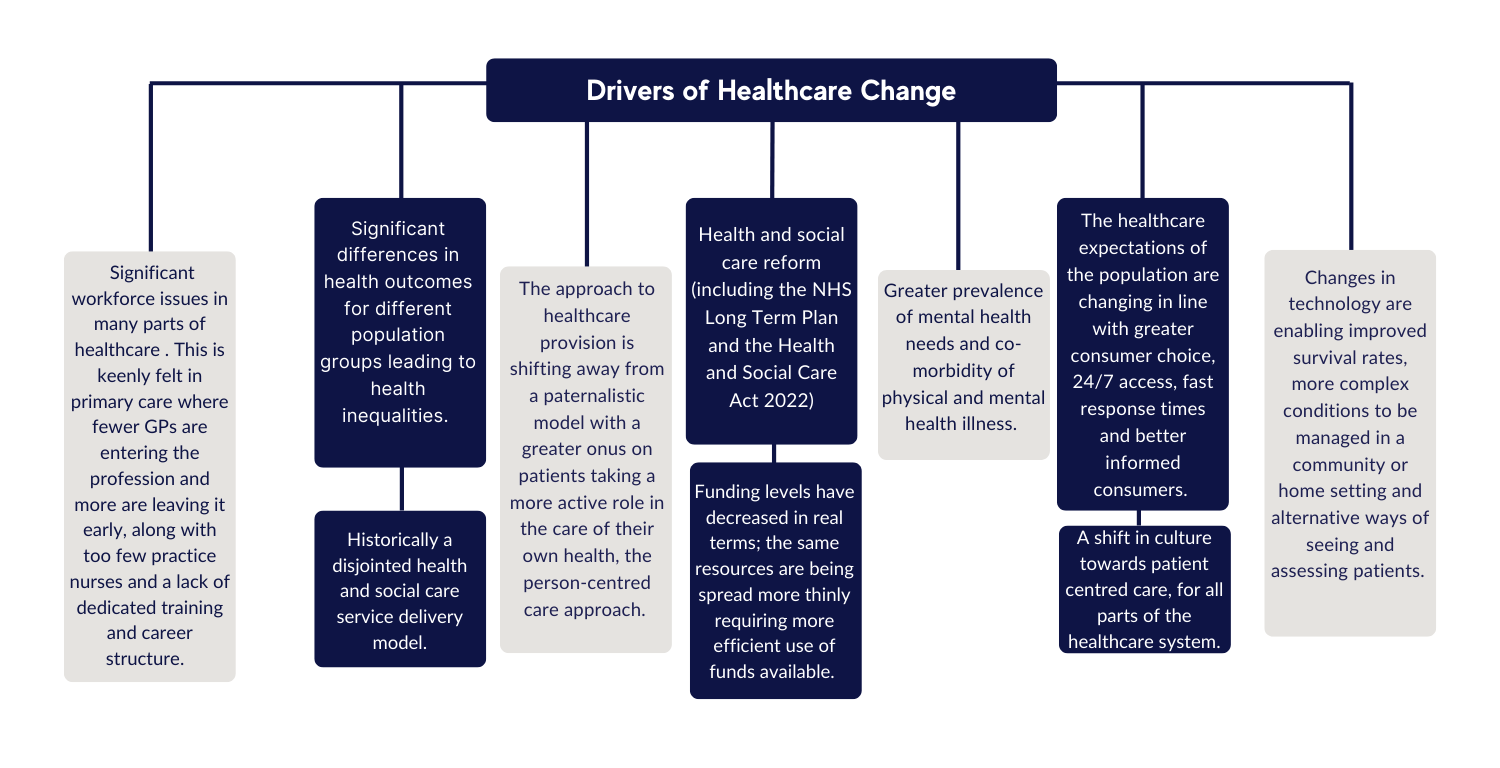
Figure 1 - Drivers of Healthcare change
General practice is the first point of call for most users of the NHS, therefore the above drivers result in a huge impact on their services and the premises that accommodate them. As a consequence, increased demand, the need to deliver the Primary Care Network (PCN) contract, along with ever expanding services, has left many GP practices across the country struggling to provide essential primary care services because of inadequate premises.
This means that the need for primary care providers to have access to and operate from modern, efficient buildings, equipped with the latest technologies that are reliable and well-maintained, with the capacity to cope with future demands has never been more important.
Why is estate planning so important for primary care and networks?
Often premises issues are considered after service redesign discussions have concluded and the limitations of unsuitable premises are therefore not recognised early enough.
This can lead to primary care and community estate being a blocker rather than an enabler to moving more care out of an acute setting.
This means that the importance of estate planning at a PCN level cannot be underestimated, enabling networks and general practice to work with partners to deliver a range of extended community-based services in optimal care settings closer to people’s homes. This would allow primary care and PCNs to respond to the changing needs of their local population and improve patient outcomes.
The principles of estate planning and developing a strategy are universal across sectors and organisation, consisting of a four-stage approach, which asks the following questions of the organisation:
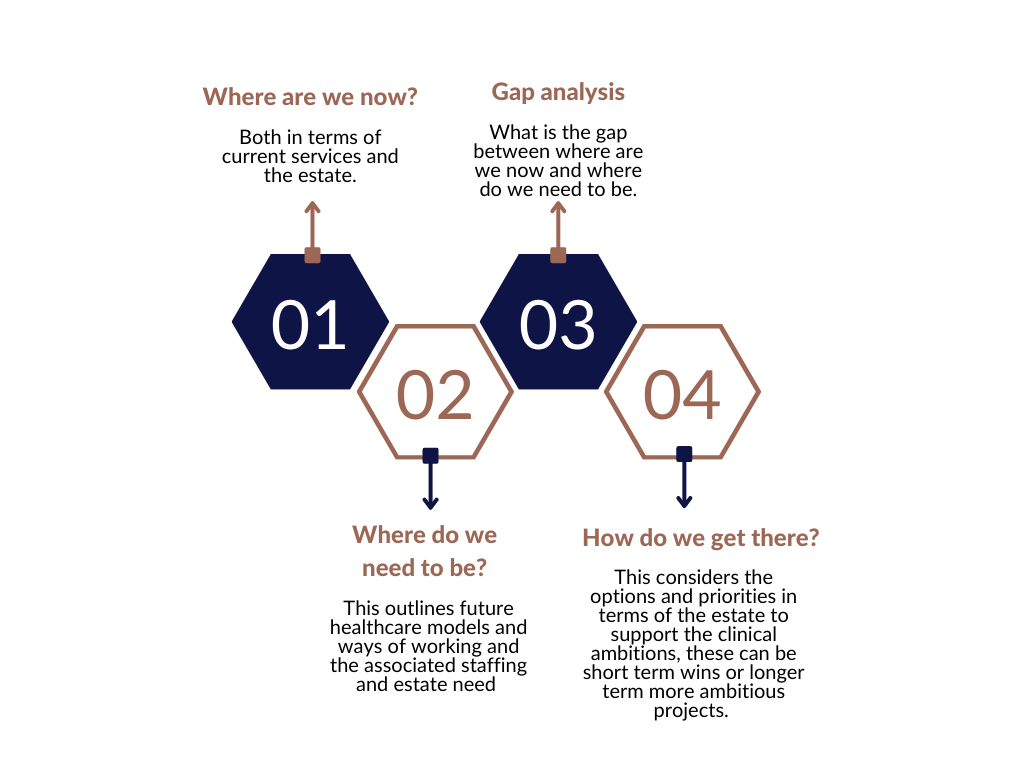
Figure 2 - The four-stage estate planning approach
Some of the longer-term solutions for PCN or systems can involve significant investment, therefore it is crucial that prior to jumping to new build solutions that all other options are considered. This includes maximising the utilisation of current suitable estate and working with partners across the public sector to ensure that all public sector assets are appraised. This can lead to some shorter term, quick win solutions for general practice and networks.
In some areas there is likely to be a need to review more radical longer-term solutions in order to support the delivery of new models of care, which are people-centred, focusing on a holistic approach to people’s well-being including education and health prevention. This may involve the development of new premises or repurposing of existing estate.
When looking at developments of these types of facilities it is clear that there are key considerations:
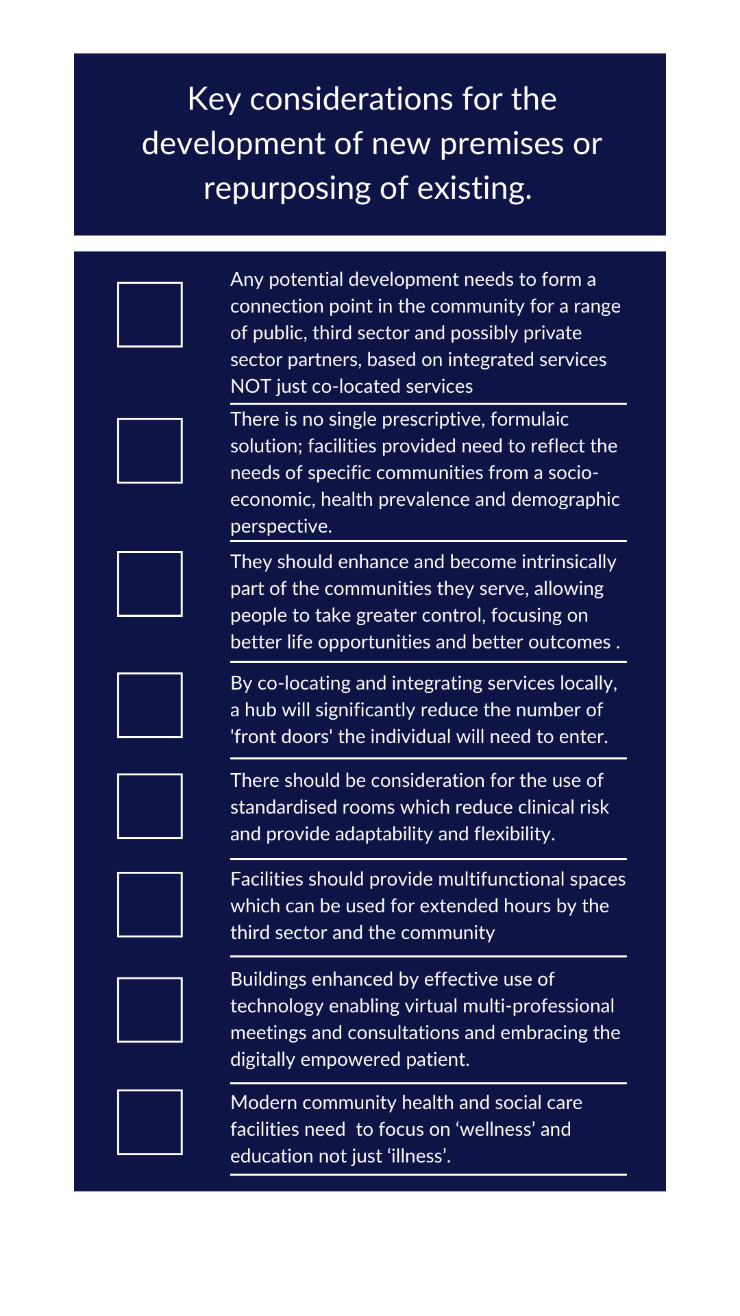
Figure 3 - Key considerations for healthcare developments
How can well planned health estate support regeneration?
The location and accessibility of public sector assets including health facilities is critical when planning for the future. Faculties need to be well-located to ensure equitable access for all and inclusive design-meaning everyone can use service and facilities safely, easily and with dignity. The need for public sector buildings in which to deliver new service models can also act as a significant catalyst for change in a community, spearheading investment and potentially regeneration.
This opportunity for future healthcare developments to support regeneration in communities could be pivotal in reimagining what our high streets look like. Through the NHS Reset campaign, the NHS Confederation and Power to Change are working with national and local leaders from a broad range of sectors to understand the challenges facing the high street and the opportunities to rethink the critical role the health sector can play as places look to recover economically and socially from COVID-19.
There are significant benefits which could be realised by building health into our declining streets. Not only can it play an important role in addressing health inequalities, offer additional capacity for health service delivery and encourage healthier lifestyles, but can also attract greater footfall onto the local high street, which in many places have been decimated by the growth of out-of-town retail centres and internet shopping. This can lead to more people visiting high streets who may not previously have done so, either as staff members who work in health and social care or people accessing services, creating more vibrant spaces with potential for change in both ethos and diversity.
Looking to our high streets and creating multi-functional town centres that are a focal point for health, both in terms of creation and treatment promotes prosperity, improves safety as well as encourages interaction.
Due to high streets generally being more accessible to people without cars who utilise public transport, cycle or walk, improved health and public sector services at the heart of communities should also make a wider range of health and care services more accessible, increase patient and customer engagement and lead to improvements in health outcomes and the wider determinants of health.
With integrated and joined-up public sector partner working, along with well-designed inclusive facilities located in the right place, an ethos of ‘every contact counts’ can easily be implemented; where all encounters are seen as an opportunity for a brief intervention to support improved lifestyle choices or to allow underlying issues such as debt or housing issues to be addressed.
Implementing high-quality built environment interventions is one way the health and social care sector can address the current disjointed service delivery model and move towards the development of places that are designed for public interaction, bringing the public health and economic gains that come with good quality high-street design to the forefront of local and national stakeholder attention.
Without action, Primary Care Networks will miss out on implementing cost effective built environment solutions that not only make economic sense but also work to provide local communities with clear ‘building blocks’ for health.
An excellent example is Limelight which is an award-winning health and wellbeing hub located in the heart of Old Trafford, Greater Manchester. Part of Trafford Housing Trust, Limelight offers a wide range of facilities, community activities, and health social care and local authority services, as well as extra care apartments.
The key focus is on the local community and Limelight being a the hub of Old Trafford, where people can come to meet, eat, celebrate, collaborate, learn and grow.
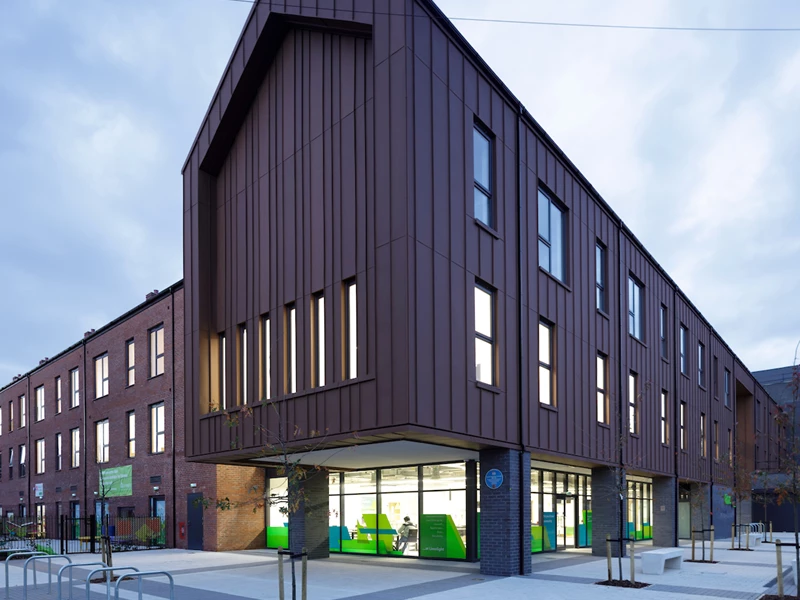
Figure 4 - Limelight. Old Trafford, Greater Manchester
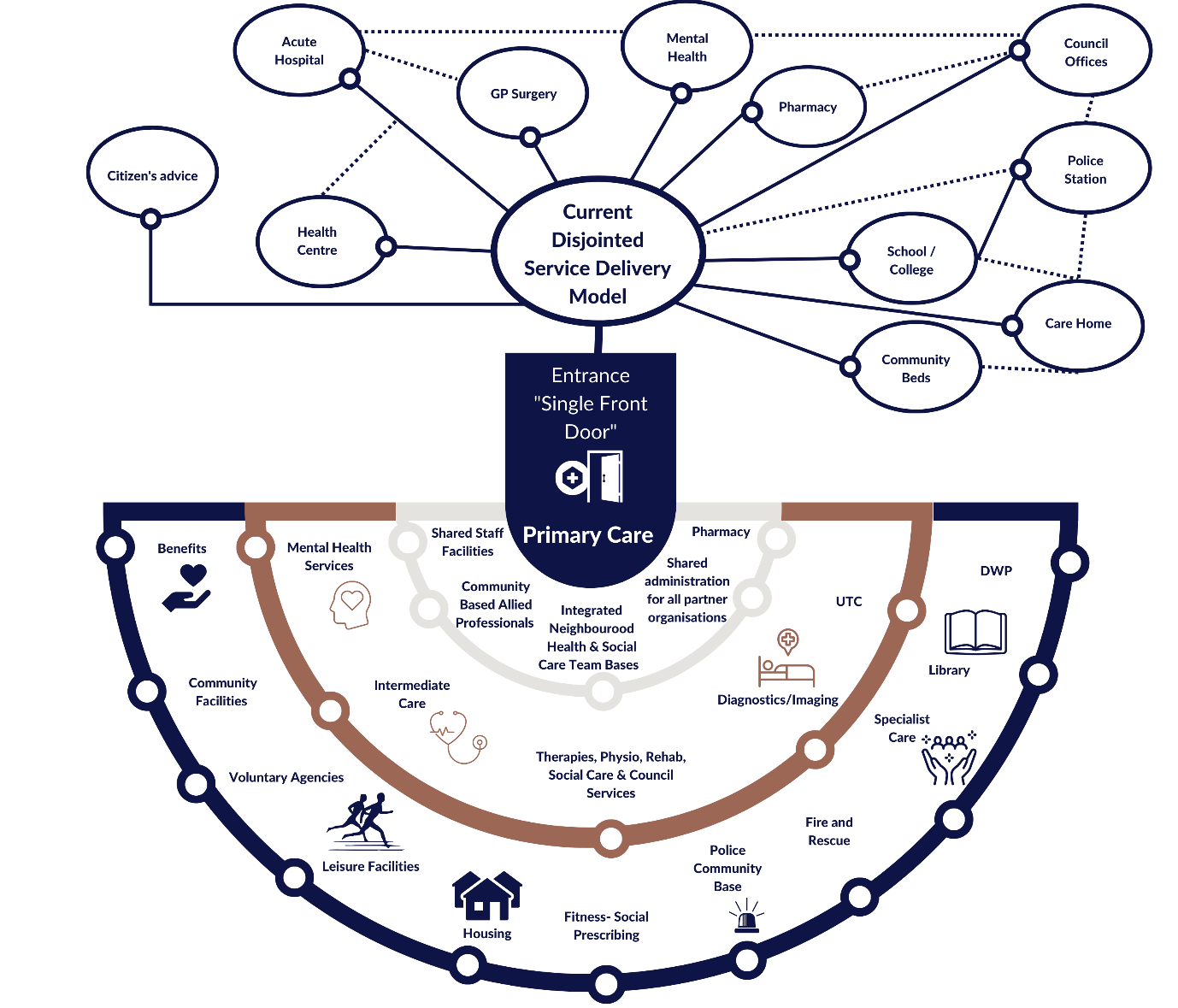
Figure 5 - The current disjointed service delivery model vs integrated service delivery
References
1 Long-term conditions and multi-morbidity | The King’s Fund (kingsfund.org.uk)
2 Long-term conditions and multi-morbidity | The King’s Fund (kingsfund.org.uk)
3 UK population aged over 75 (millions) | The Nuffield Trust

Content provided by Jonathan Turner, AA Projects. For more information please visit www.aaprojects.co.uk or email This email address is being protected from spambots. You need JavaScript enabled to view it..


